Underutilized S914 and the Case for Moving IBM i to PowerVS
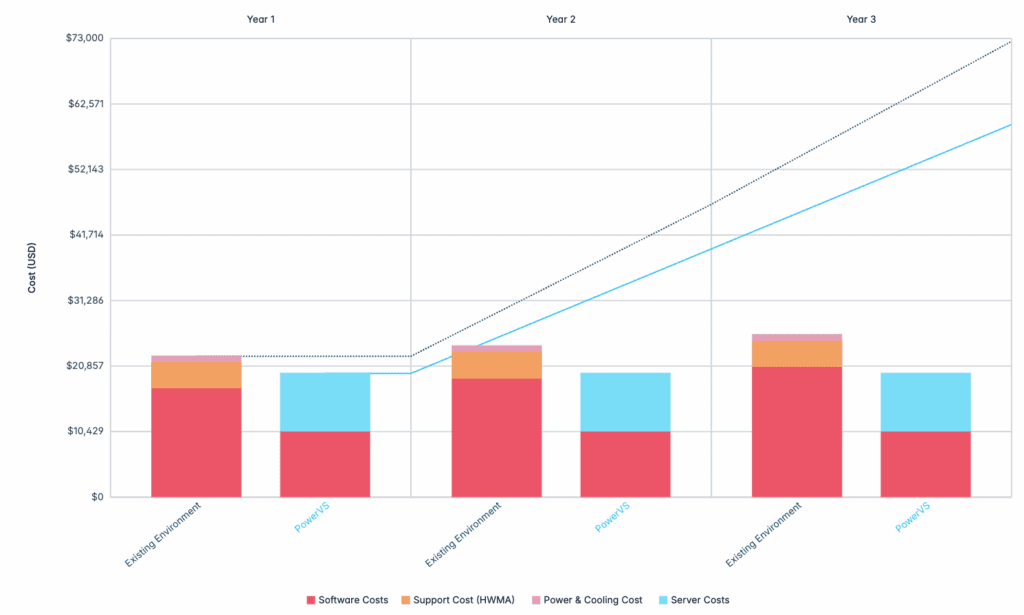
(2) S914 4-core 64GB RAM machines vs. PowerVS
Many IBM i environments running on Power9—particularly those on S914 systems—are stable, predictable, and significantly underutilized. These systems were often sized to accommodate growth, peak usage, or licensing constraints that no longer exist. While this overcapacity hasn’t impacted performance, it has quietly shaped cost structure and operational burden.
As Power9 approaches end of standard support, organizations are increasingly evaluating whether continuing to own and manage physical infrastructure still aligns with their business and staffing realities. In many smaller IBM i shops, this question is less about performance and more about efficiency, risk, and focus.
A recent three-year total cost of ownership assessment comparing an underutilized S914 environment to PowerVS highlights how moving IBM i to the cloud changes both the financial and operational equation. The full analysis is linked in the comments.
The Challenge with Underutilized S914 Environments
Power9-based S914 systems continue to run IBM i workloads reliably, but underutilization introduces inefficiencies that become harder to justify over time.
Key challenges include:
Paying for licensed capacity that is rarely used
Carrying full responsibility for hardware lifecycle management
Increasing operational risk as the platform approaches end of support
Dependence on specialized Power hardware expertise in small IT teams
In many cases, the system itself is not the problem. The issue is that the organization is absorbing infrastructure overhead that no longer matches the scale or criticality of the workload.
Why PowerVS Changes the Conversation
PowerVS shifts IBM i from an owned asset to a service-based model. Rather than optimizing around physical hardware, organizations can align compute, memory, and licensing more closely with actual workload requirements.
The TCO assessment shows that much of the advantage in moving from an underutilized S914 to PowerVS comes from structural changes rather than aggressive cost cutting. These include eliminating hardware ownership, reducing ongoing maintenance exposure, and simplifying operational responsibility. The full analysis is linked in the comments.
From an operational standpoint, PowerVS offers:
No on-prem hardware to maintain, refresh, or support
Reduced dependency on deep Power infrastructure expertise
Improved resilience and recovery without added local complexity
More IT focus on applications and business outcomes rather than platform upkeep
For smaller organizations, these operational factors often outweigh theoretical infrastructure savings.
Aligning IBM i with Organizational Capacity
For some IBM i environments, staying on-prem remains the right choice. But for organizations running underutilized S914 systems with limited IT resources, PowerVS can represent a better alignment between technology decisions and operational capacity.
The value of moving IBM i to the cloud in this context is not just about cost. It is about reducing risk as Power9 ages, simplifying infrastructure responsibility, and ensuring IBM i remains sustainable without increasing staffing or specialized skills.
Evaluating PowerVS this way reframes the discussion. It’s not a question of whether the S914 still works—it does. The question is whether owning and managing that infrastructure is still the best use of the organization’s time, capital, and attention.
Download Full Repatriation Analysis by Filling Out Below Form